
Fascial Manipulation
(FM): a manual soft tissue technique to evaluate and treat myofascial dysfunction.
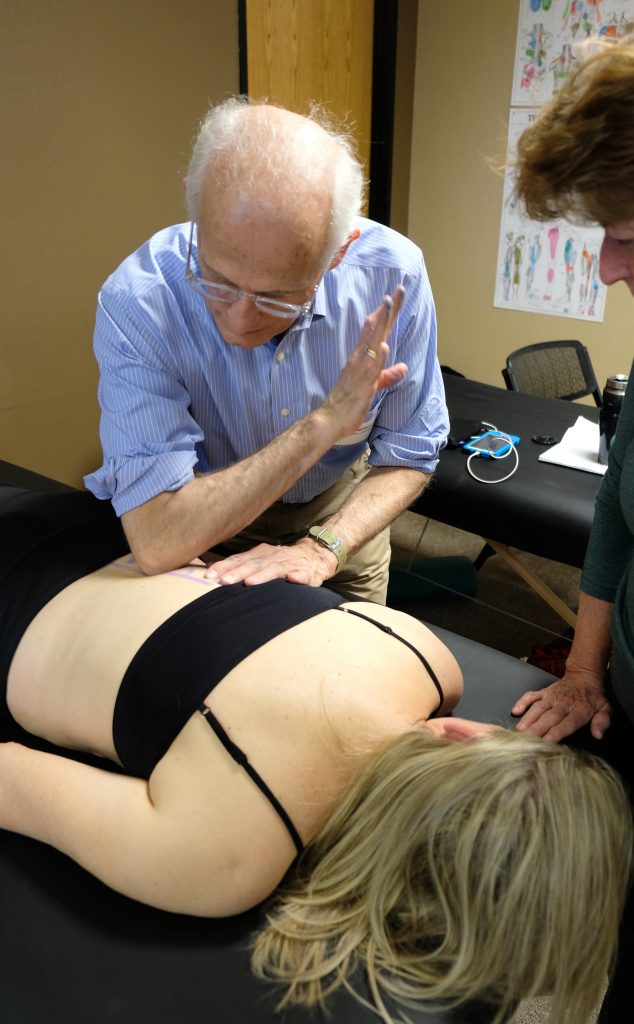
 FM was developed by Luigi Stecco in Italy 40 years ago and has been evolved and improved upon ever since. There is no other soft tissue method with as much peer reviewed literature as FM.
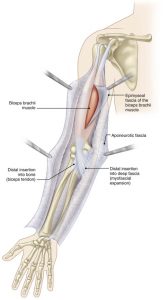
Stecco has mapped out sequences of critical points in the deep fascia through cadaver dissection. These he has termed “centers of coordination” (CCs) and “enters of fusion” (CFs). These points are found to very often mirror acupuncture meridians.When adhesions or (“densifications”) build up in CCs or CFs, this directly affects and negatively alters joint biomechanics, alignment, posture, and range of motion resulting in dysfunctions such as pain syndromes and restrictions in range of motion. Manipulation of CCs and CFs with deep pressure and friction is carried out manually.
Proper glide must be re-established between fascial layers and different adjacent tissues such as muscles, tendons, ligaments, bones, and skin. As mentioned above, this technique can also be used to balance and maintain proper tensional equilibrium between the CCs and CFs to treat internal organ dysfunction, thereby reestablishing homeostasis in the body.
wikipedia.org/wiki/Fascial_Manipulation
.
Graston
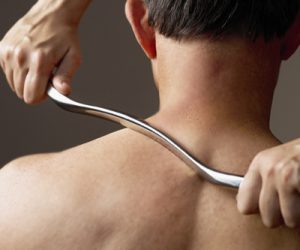
Also known as instrument-assisted soft tissue mobilization. Graston helps to break up deep scar tissue and adhesions and promotes a significantly faster recovery time. Benefits it has: Faster rehabilitation and recovery, Decrease treatment time,Resolves chronic conditions thought to be permanent, Reduced need for anti-inflamatory medication.
Therapeutic exercise
 This is a hands-on approach to rehabilitative exercise with the goal of stretching and strengthening injured muscles.
Therapeutic exercises refers to a wide range of physical activities that focus on restoring and maintaining strength, endurance, flexiblity, stability and balance. The goal of therapeutic exercises is to return an injured patient to a fully functioning, pain-free state and they are specific to each patient.
The Functional Movement Screen
(FMS) is a tool used to identify asymmetries which result in functional movement deficiencies. The FMS aims to identify imbalances in mobility and stability during seven fundamental movement patterns. These movement patterns are designed to provide observable performance of basic locomotor, manipulative and stabilizing movements by placing an individual in extreme positions where weaknesses and imbalances become noticeable if appropriate mobility and motor control is not utilized. Once these deficiencies have been identified through the FMS Screen, a program of corrective exercises is then developed with the goal of preventing musculoskeletal injuries. The FMS consists of seven movement patterns which require mobility and stability.